 Deirdre
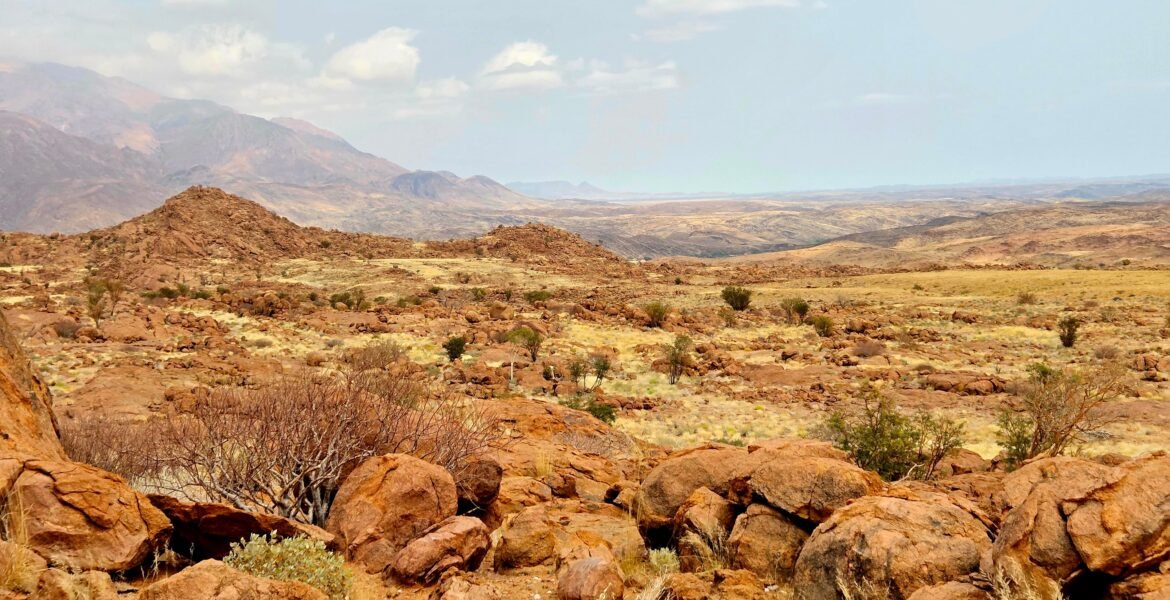
Damaraland is a stunning region in northwest Namibia. It stands as a transition zone from the rugged barren landscapes of the Skelton Coast to the inland mountainous regions.
This grassland plateau offers many hiking opportunities, wildlife viewing and a beautiful place to enjoy the peace and freedom that Namibia has to offer.
In August, I joined a 4-day slackpacking hiking trip through Damaraland. The Camino covered approximately 60km, and began at Madisa Camp, before concluding at the White Lady Lodge. This is one of the more accessible routes in Namibia.
This guide will provide details on the routes, logistics, and day to day activities of this entertaining and beautiful hike.
- Tour Company/Communication
- Accommodations in Windhoek
- Transportation/Support Vehicle
- Accommodation
- Food/Drinks
- Facilities
- Hiking Overview
- Day 1: Madisa camp to Moringa camp
- Day 2: Moringa camp to Euphorbia camp
- Day 3: Euphorbia camp to Cheetah camp
- Day 4: Cheetah Camp to White Lady Lodge
- Essential Multiday Hiking Gear
- Best Time to Visit Damaraland
- Final Thoughts
Tour Company/Communication
I travelled to Damaraland with Wild Cherry Adventures. They are a local company based in Windhoek. Communication was excellent from start to finish.
Ellen and her team are very passionate about the caminos in Namibia and about giving back to local communities. They provided great service and communicated clearly before pickup via WhatsApp, sharing updates and useful packing tips.
Accommodations in Windhoek
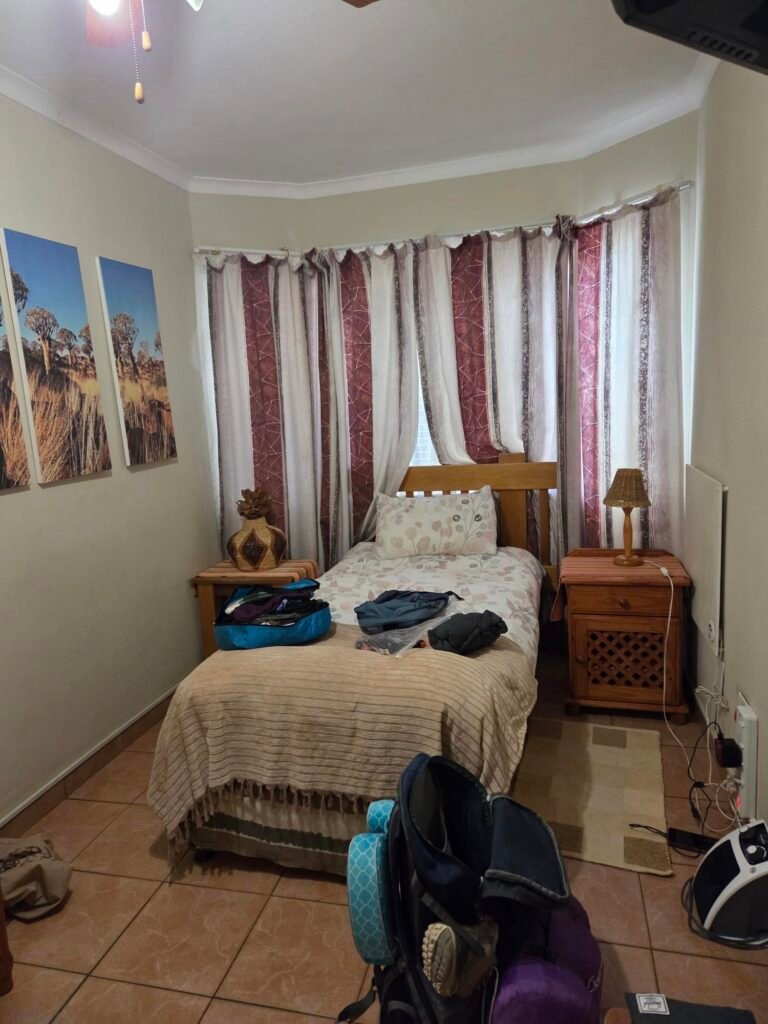
Prior to starting the tour I stayed at the African Kwela Guest House. The room was cozy and basic and the owner was kind enough to arrange a transfer from the airport. Facilities included a pool, bar and a delicious homemade breakfast.
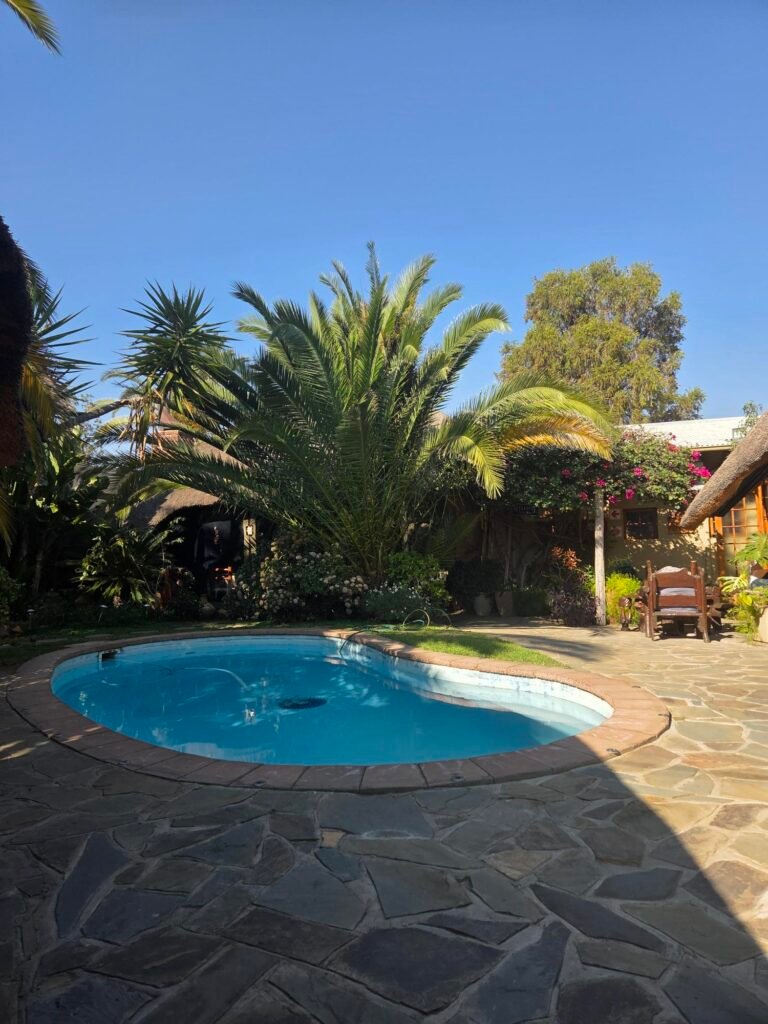
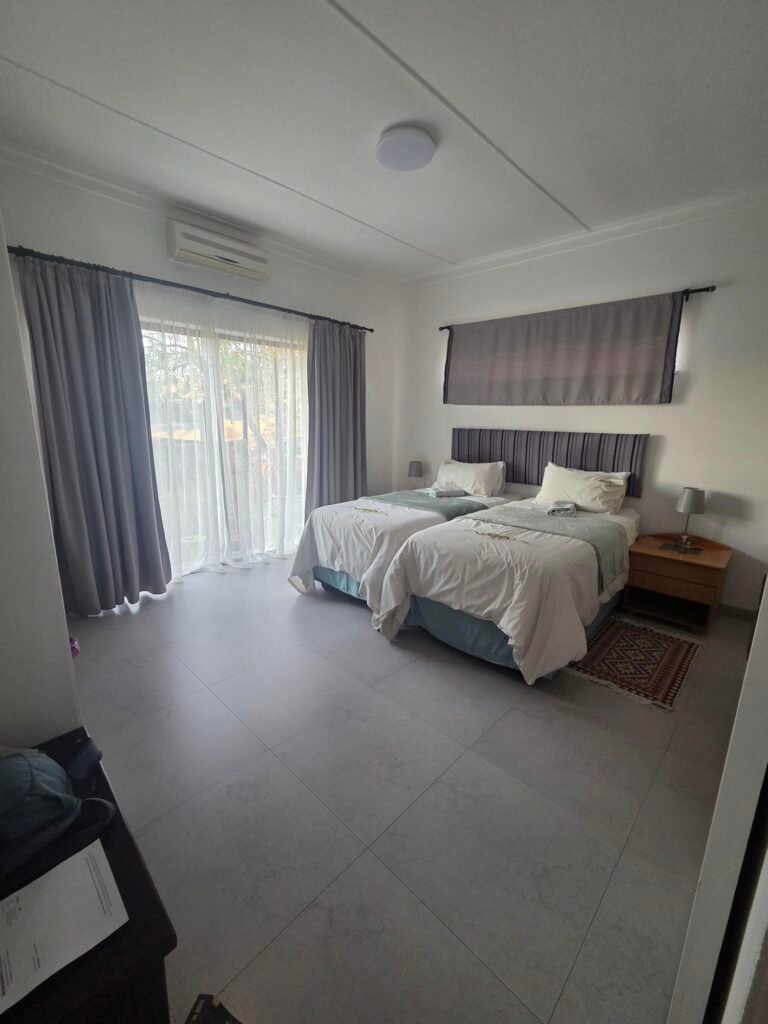
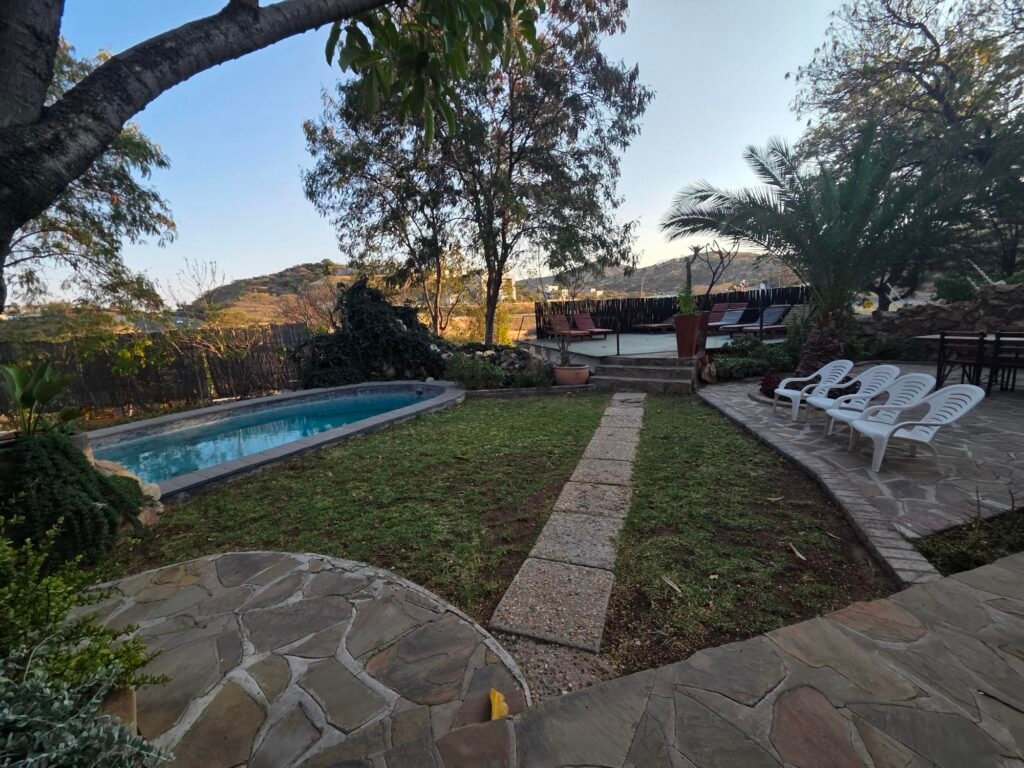
Before heading back to Canada, I stayed at the Guesthouse Terra Africa. The spacious guesthouse offered breakfast, a pool, shower/tub, and beautiful garden and city views.
Transportation/Support Vehicle
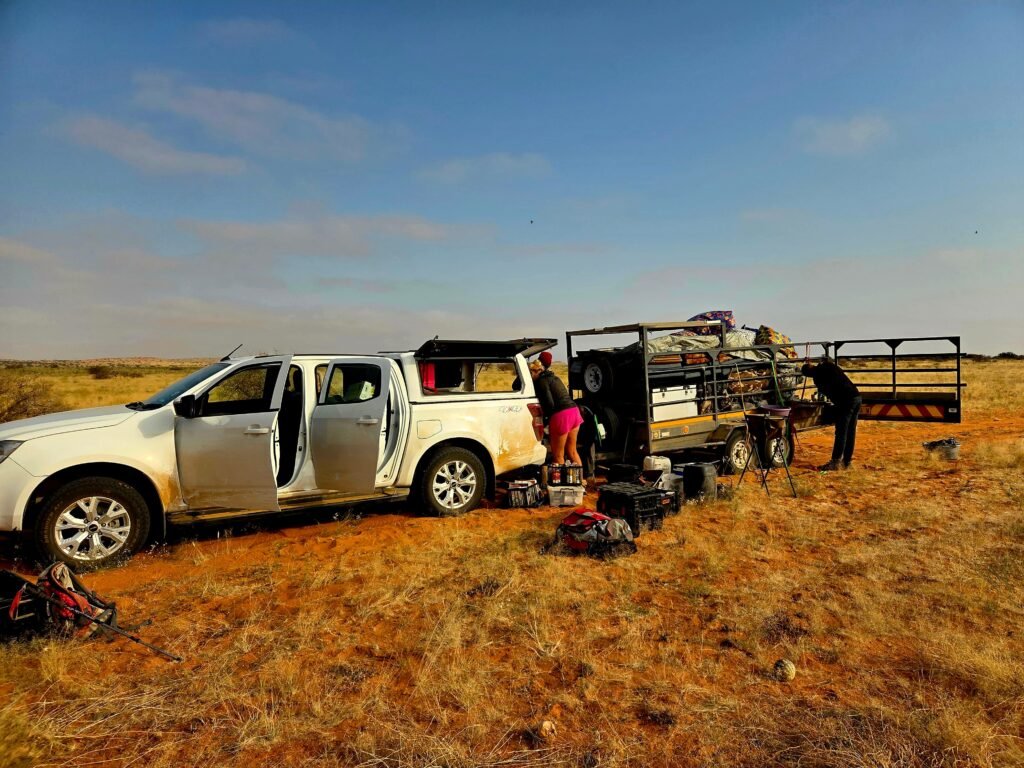
The tour began from Windhoek, where everyone was picked up from their desired location. Our group was transported in a large comfortable van to Madisa Camp, a journey approximately 4-5 hours.
We stopped often for snacks and washroom breaks. Most major roads in Namibia are paved, smooth and safe to drive
The last hour however, was along an incredibly bumpy, yet entertaining road (ideally used by 4×4 vehicles). On the return journey, we ended up blowing a tire. But luckily the support crew were skilled and managed to fix it in record time.
Accommodation
Tents were erected and dismantled by the crew each day and could comfortably fit one or two people. Along with our own tent, the group was provided a mattress, stretcher bed, sheet and pillow. Lights and a bedside table were also included.
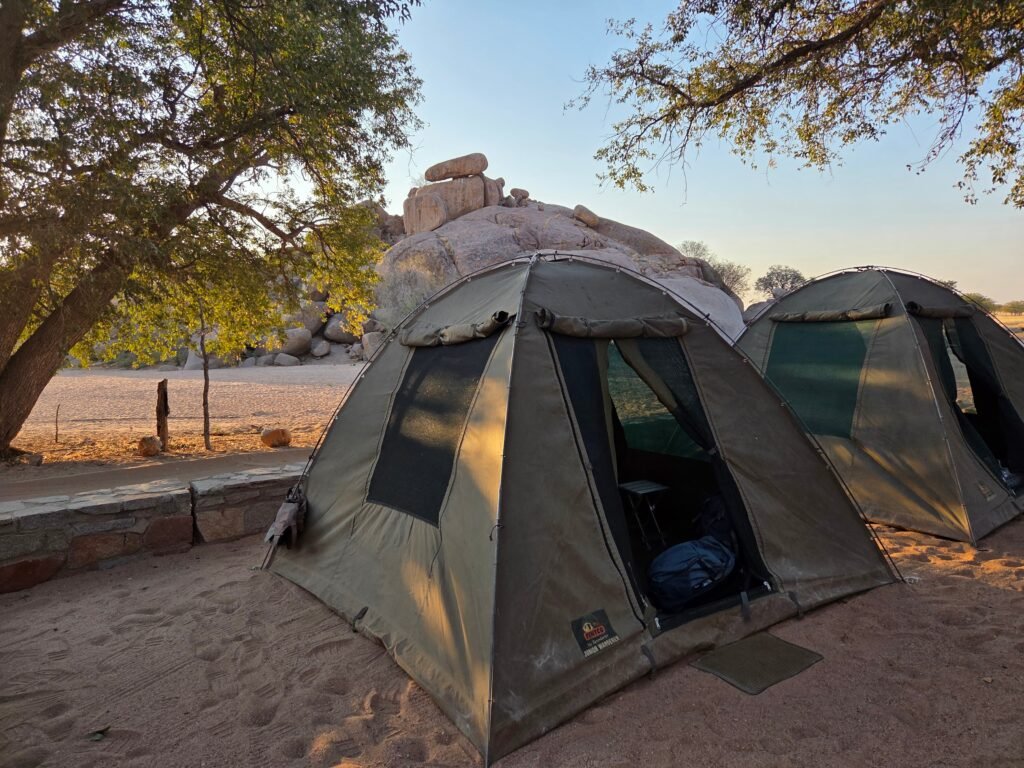
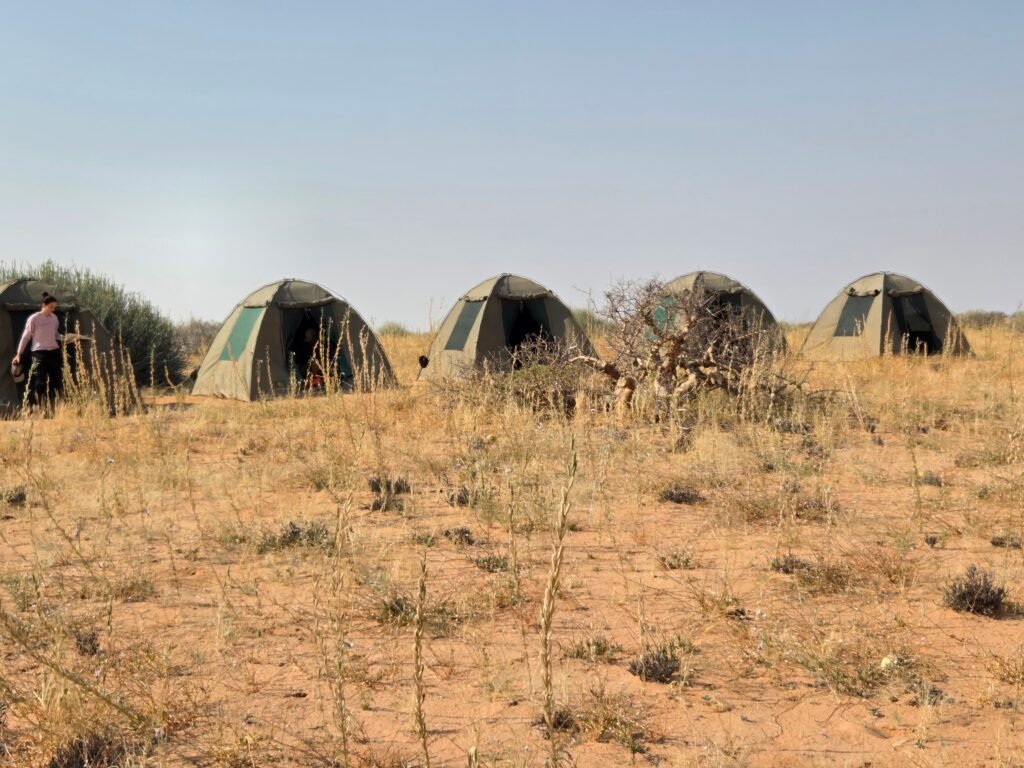
Guests were responsible for packing away their sheets and pillows each morning, in a provided bag, as well as their own sleeping bags and overnight bags.
Food/Drinks
Three delicious meals were made each day, with countless servings. Breakfasts were a combination of oats, yogurt, cereals, and fresh fruits, along with coffee, teas, juice and water (borehole water, which is safe to drink).
Lunch and dinners were a combination of German and Namibian dishes and usually various forms of game meat, salads, and breads.
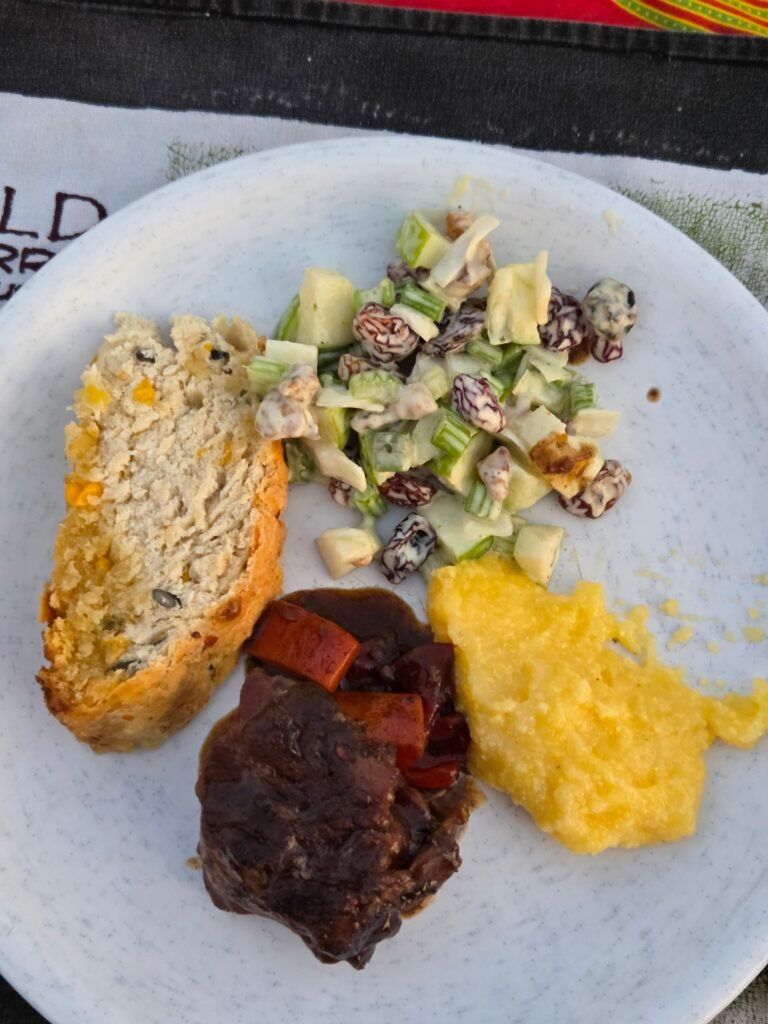
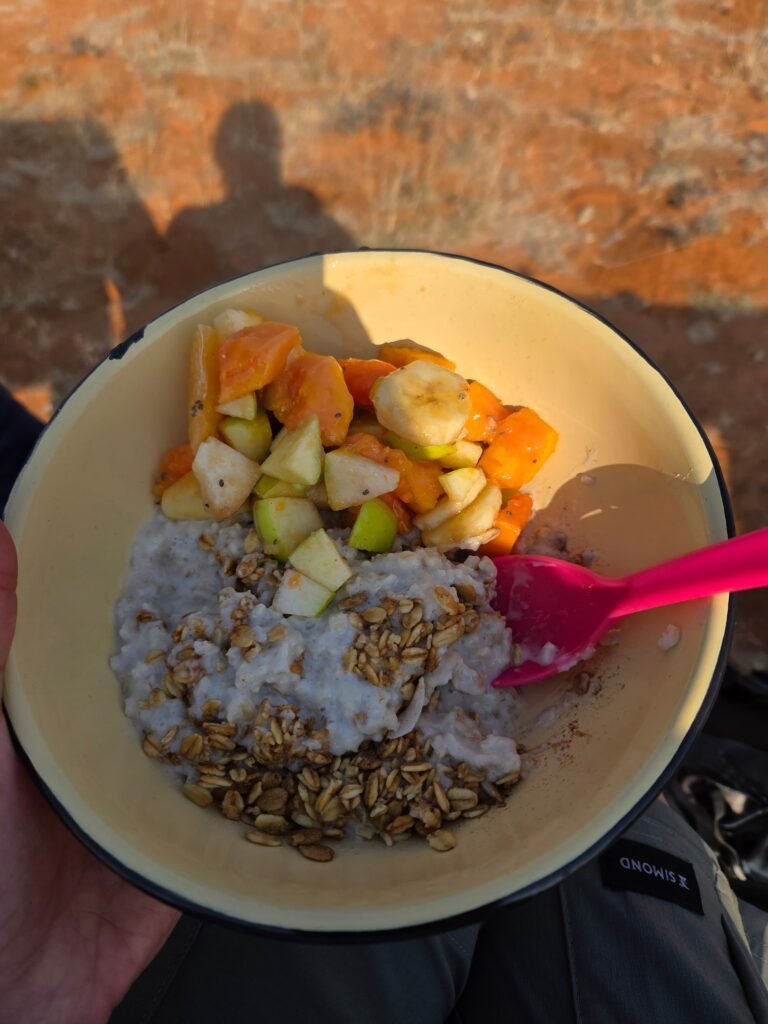
I recommend bringing additional snacks (drinks, fruit, etc) as there is a fridge/freezer available on the support vehicle. I had limited time when I landed in Namibia to gather supplies, so unfortunately, I did not utilize the fridge.
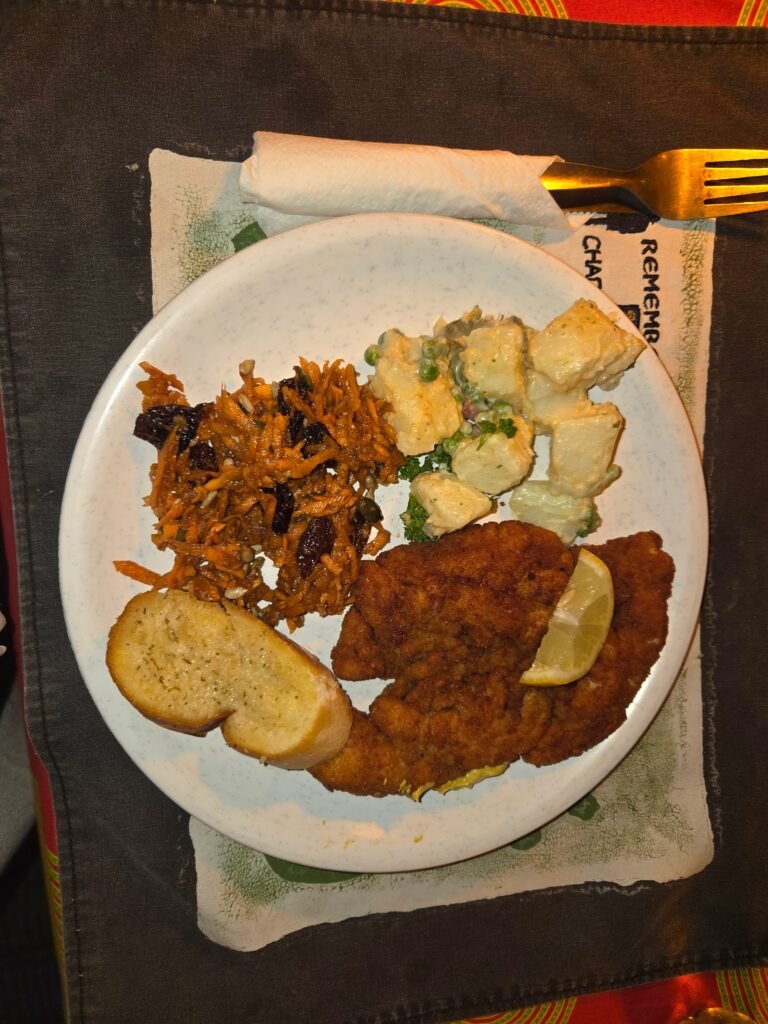
Facilities
There are 5 camps in total that are visited during this camino: 2 established camps with full facilities (Madisa and Brandberg White Lady Lodge) and 3 wild camping (limited facilities).
On the first and last evening, the group stayed at Madisa Camp and the Brandberg White Lady Lodge Campground. Both camps have a pool, flushable toilets, showers (sometimes hot), restaurant/bar, and nearby walking trails. The White Lady Lodge also has WIFI.
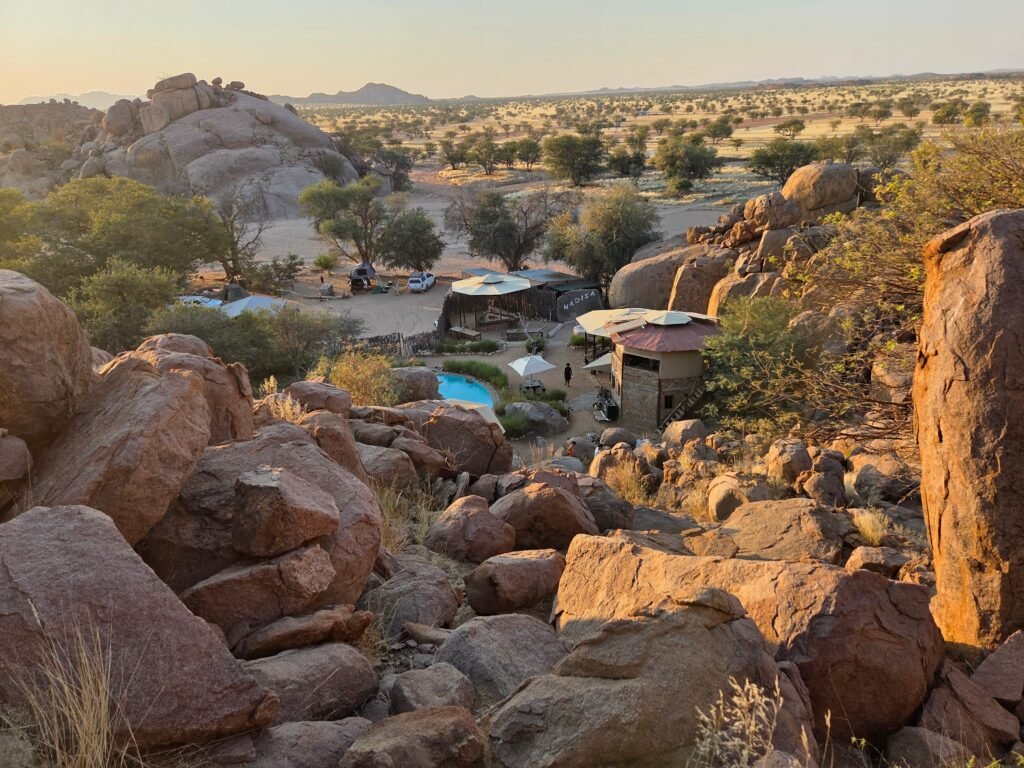
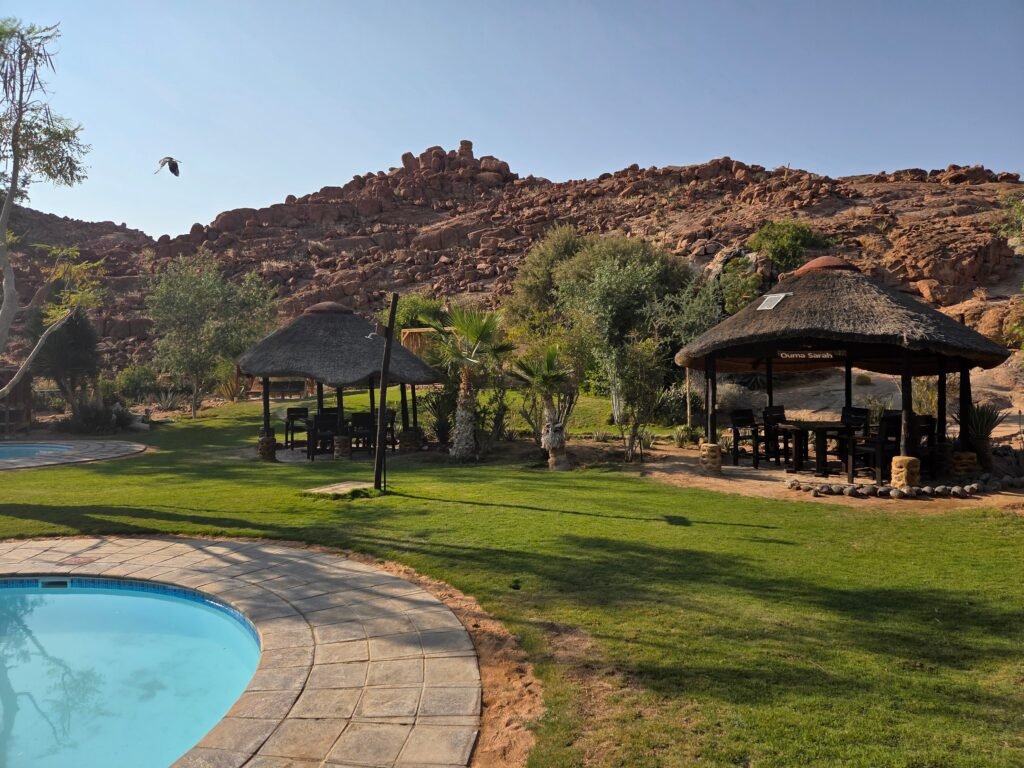
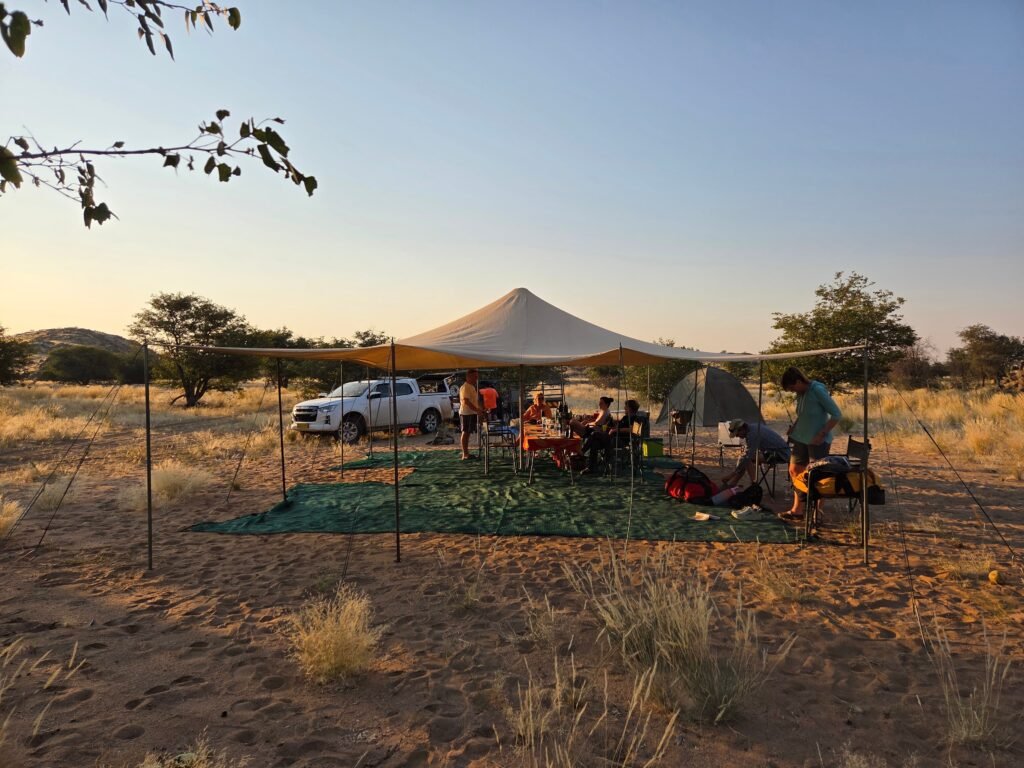
For wild camping, the facilities may not be as luxurious, but you are still provided with the basics. A pop-up canopy was built at every site, for travellers to eat, relax and converse under.
A drop toilet was set up at each wild camp location. It was surrounded by a canvas tent for privacy. Deep holes were dug, and a toilet seat was fixed to a chair for easy use. A shovel and sand were placed nearby to cover waste after use.
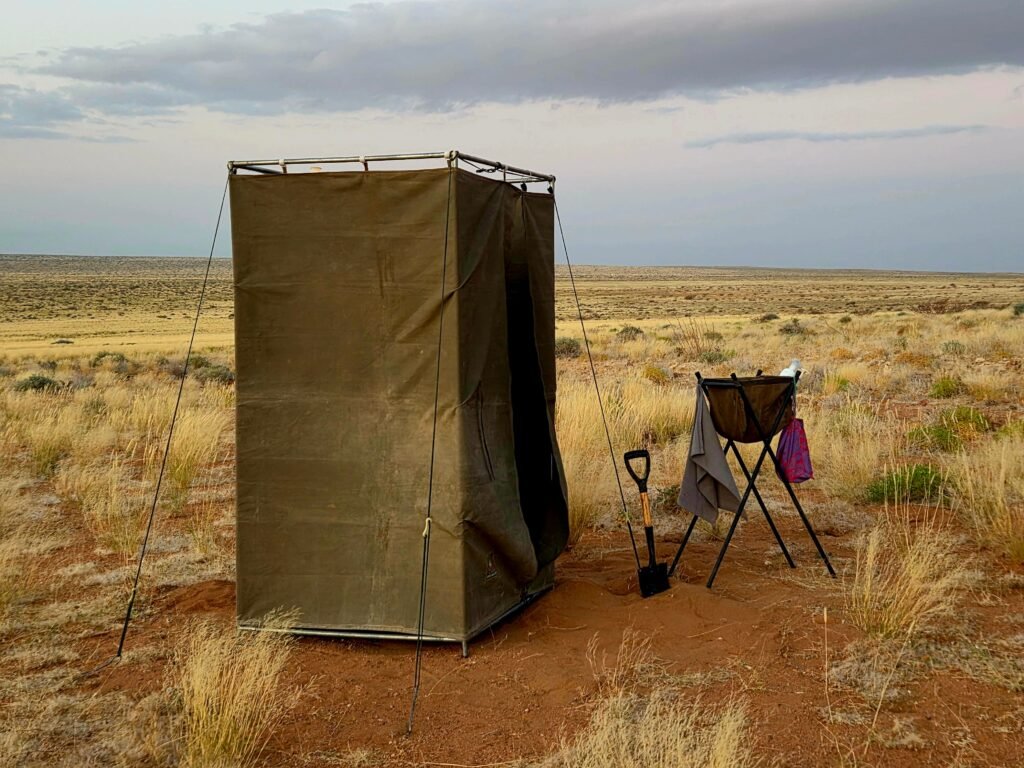
The drop toilet was equipped with toilet paper, a portable sink, and soap.
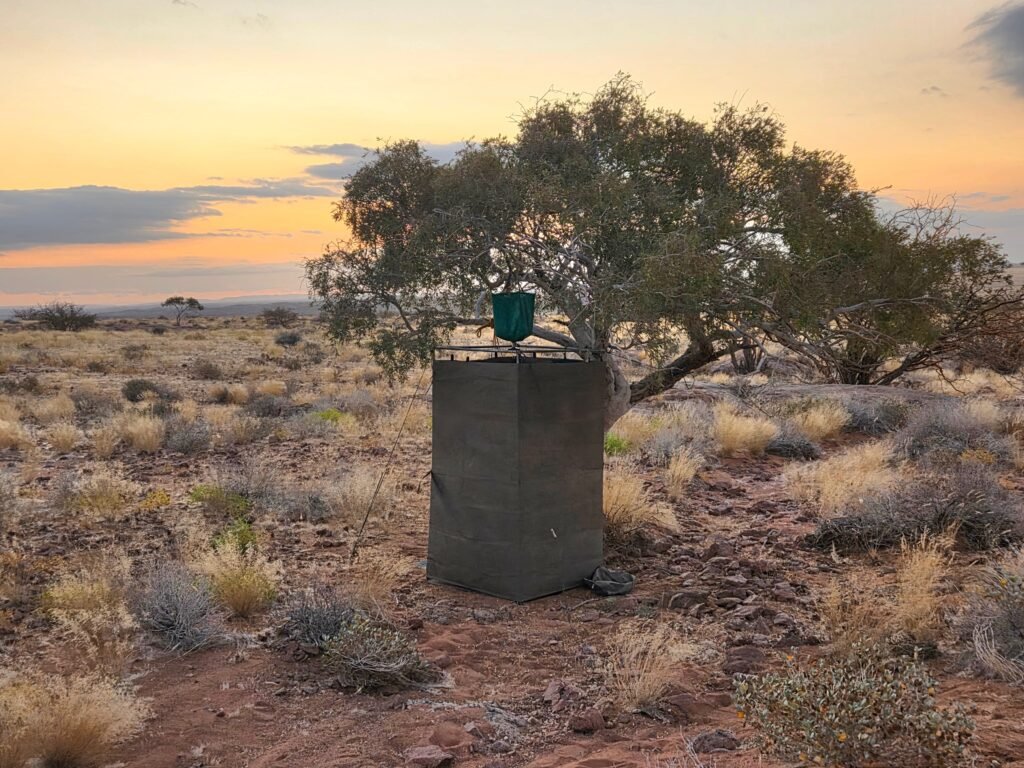
Shower facilities were set up the same way, usually on the opposite site of the camp. Although water was limited, it was nice to be able to bathe yourself. Depending on the site, some showers would be limited to that of a sponge bathe, while others including the canvas tent, equipped with an overhanding container filled with water.
Hiking Overview
Every morning began with a 6am wake up call, with fresh coffee, tea and rusk (dry biscuit) available. We were given 1 hour for light snacks and refreshments, and to pack up our gear for the day.
At 7am, we’d begin our hike for the day. After approximately 7km, the support vehicle would reach us and prepare breakfast.
After breakfast, the hike would continue for another 7km until we reached the camp. Lunch would be served around 1pm, and shower hour around 4pm.
Dinner would be served after sunset (around 7-8pm). There was plenty of downtime to explore the nearby areas around the camp, read, or take a nap.
Day 1: Madisa camp to Moringa camp
Distance: 14.96km
The hike began at Madisa Camp. We walked southwest, following the dry Goantagab River. Since it rarely rains in Namibia, the riverbed is usually dry and makes a good path to walk on.
The terrain was mostly grasslands and deep sand, which made the hike a bit tough at times. Wearing gaiters helps if you don’t like sand getting into your shoes. Walking along the riverbank made things a little easier.
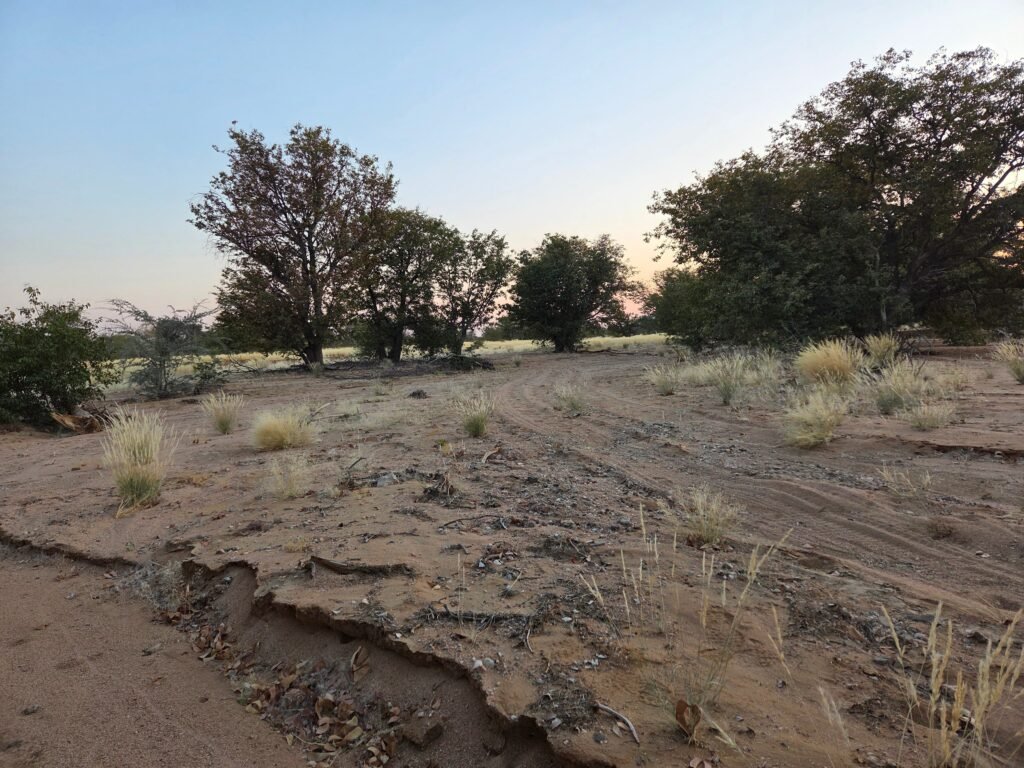
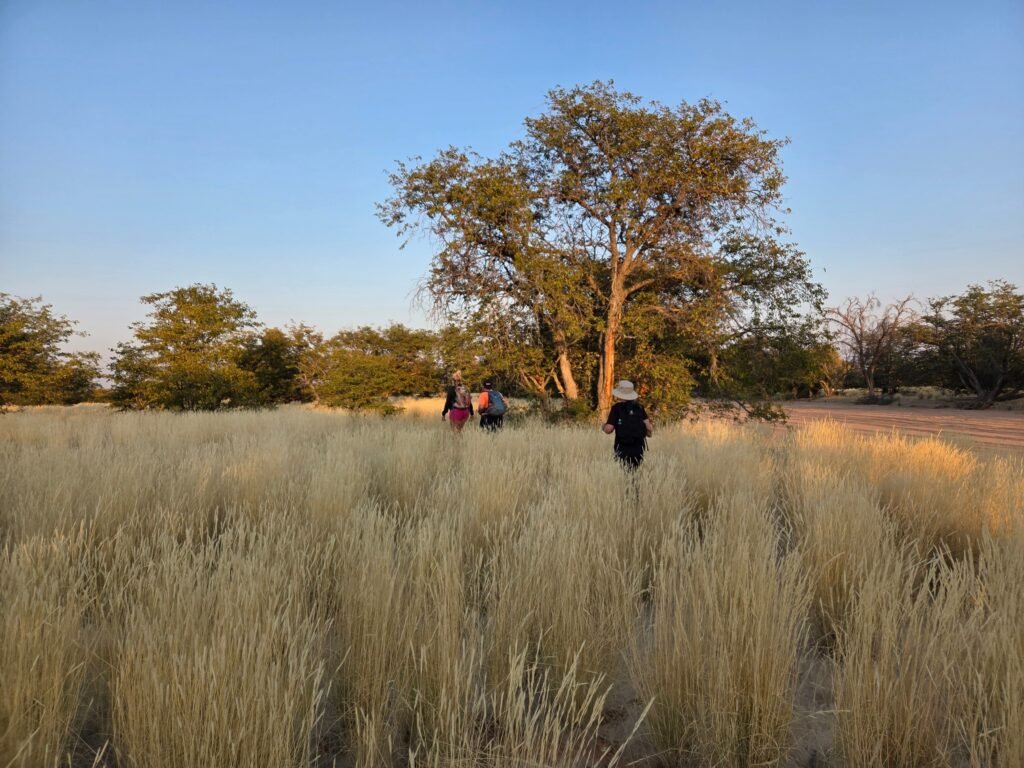
Along the way, we saw elephant tracks, beetles, grasshoppers, other large bugs, and tsamma melons.
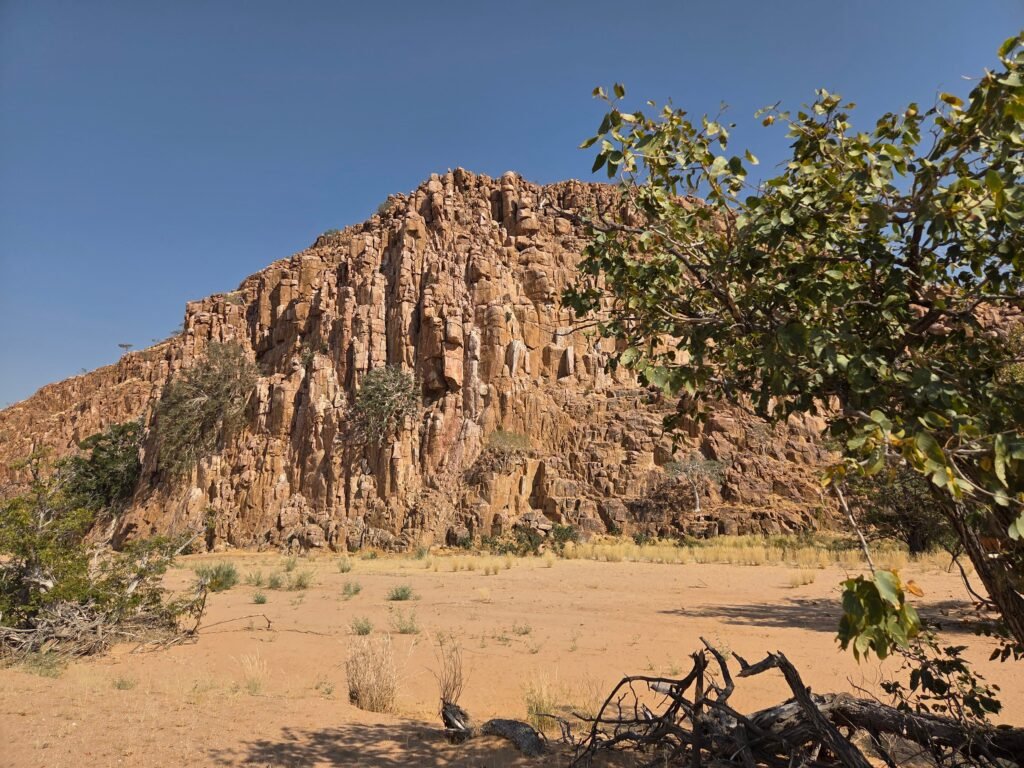
That evening, we arrived at Moringa Camp, which was set up for us by the amazing support team. It was our first of three nights of wild camping.
Day 2: Moringa camp to Euphorbia camp
Distance: 12.69km
We left Moringa Camp and followed a sandy road through open grasslands. The trail was easy to see and much kinder on our legs than the deep sand from the day before. Even though it slowly climbed up the dunes, we hardly noticed the incline.
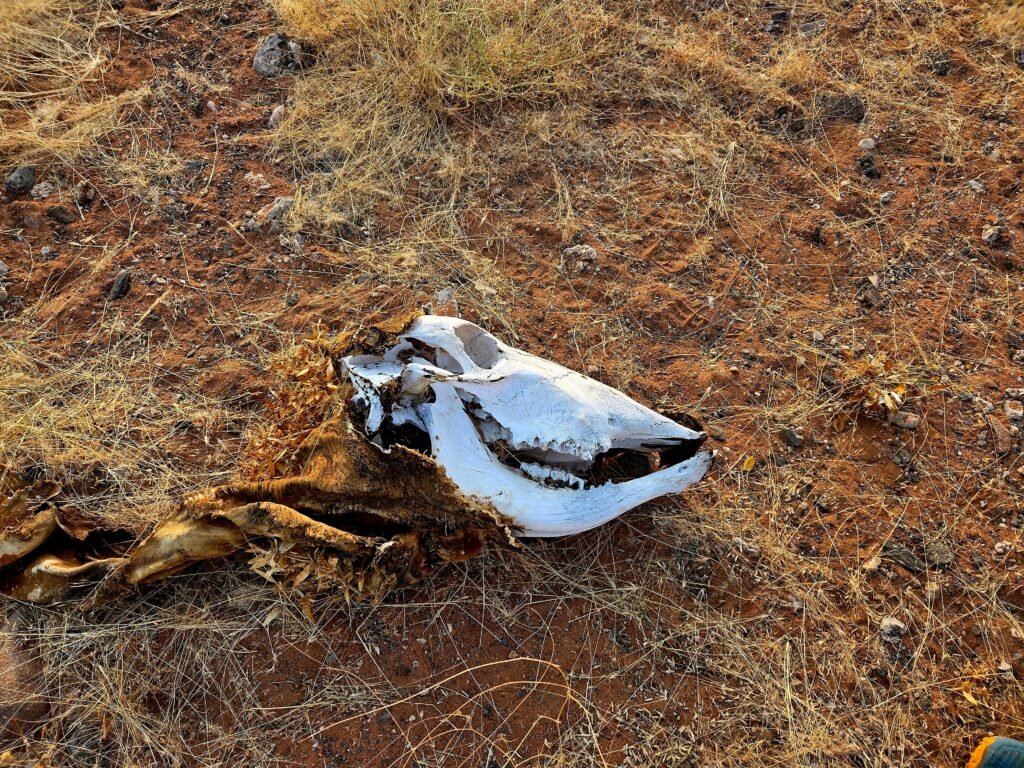
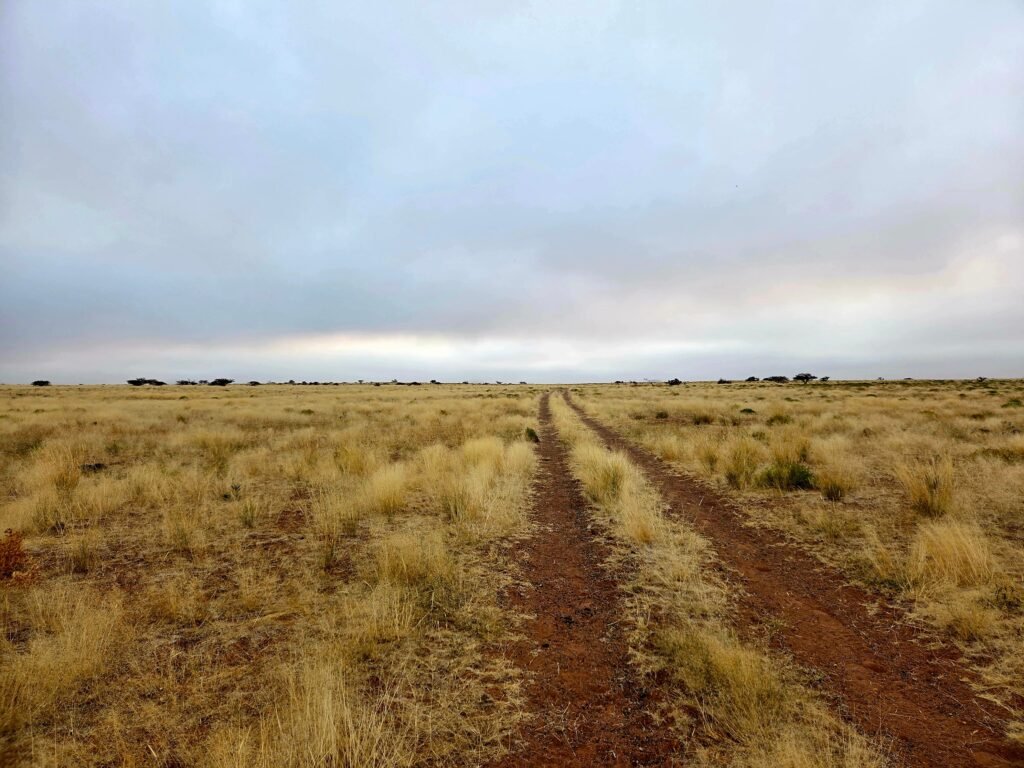
We saw springboks moving through the grass, along with signs of giraffes and elephant tracks.
Our next stop was Euphorbia Camp, set up on top of a dune with beautiful views of Brandberg Mountain in the distance.
Day 3: Euphorbia camp to Cheetah camp
Distance: 14.19km + 5km
Day three starts by rejoining the road and continuing south. The trail leads toward the Brandberg Mountain, the tallest in Namibia. We could see the mountain the whole way, slowly getting closer with every step.
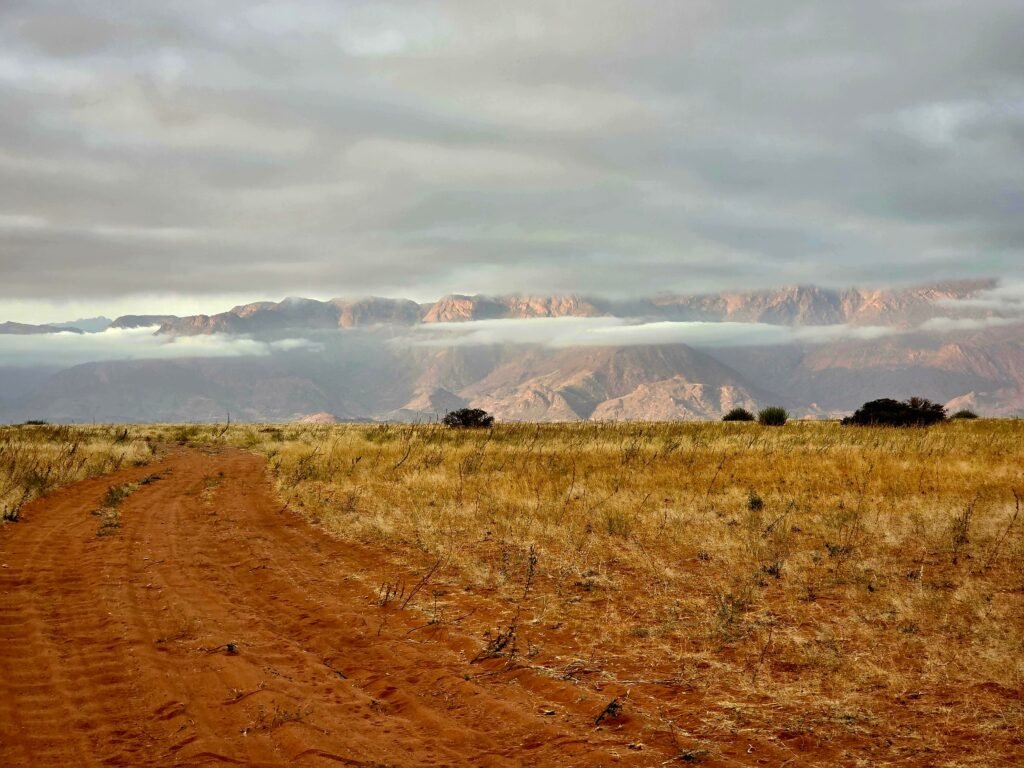
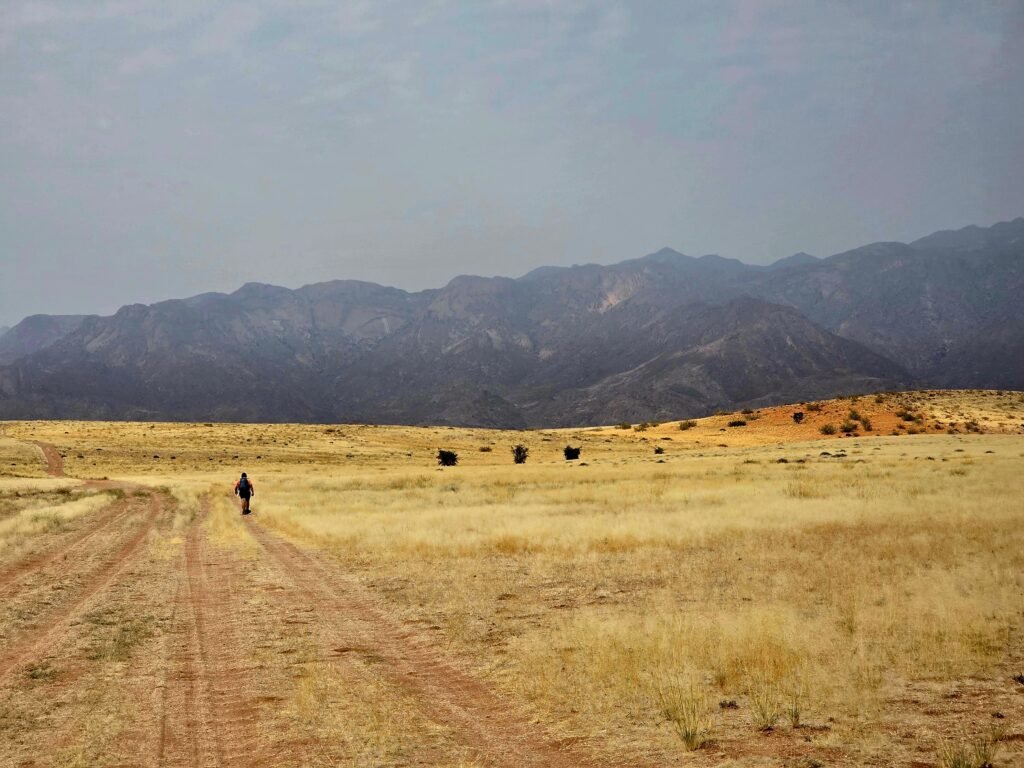
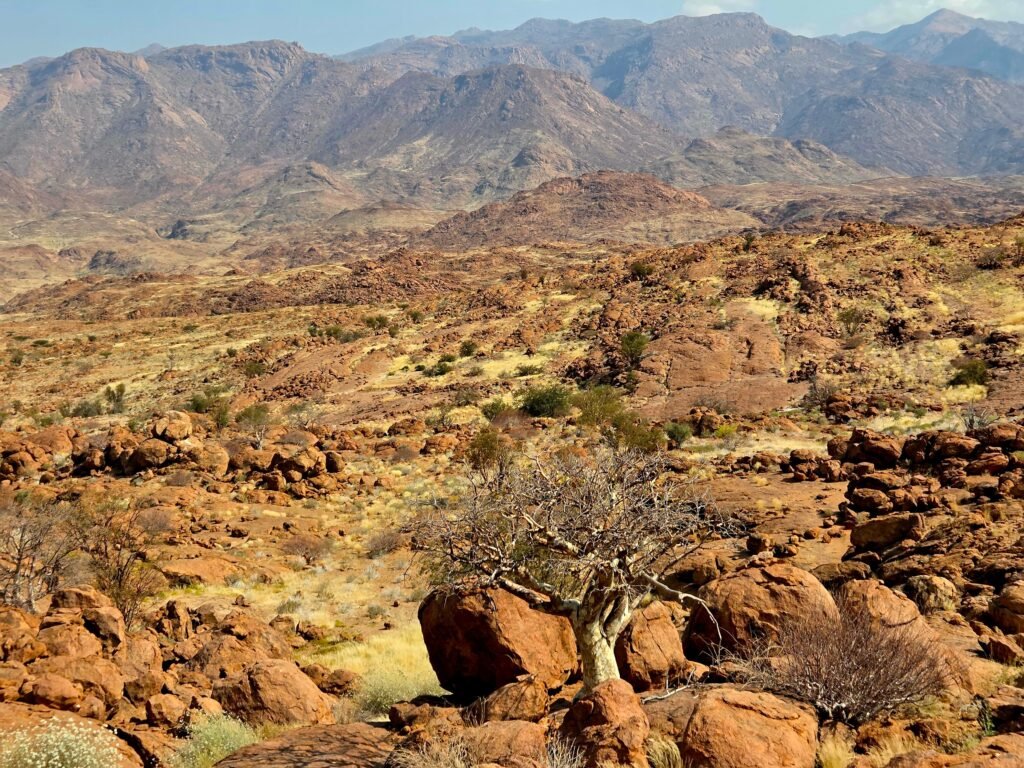
The landscape began to change, with colourful flowers and tall grass appearing along the trail. We set up camp at the base of the mountain. With giant boulders and Brandberg in the background, this was my favourite camping spot of the trip.
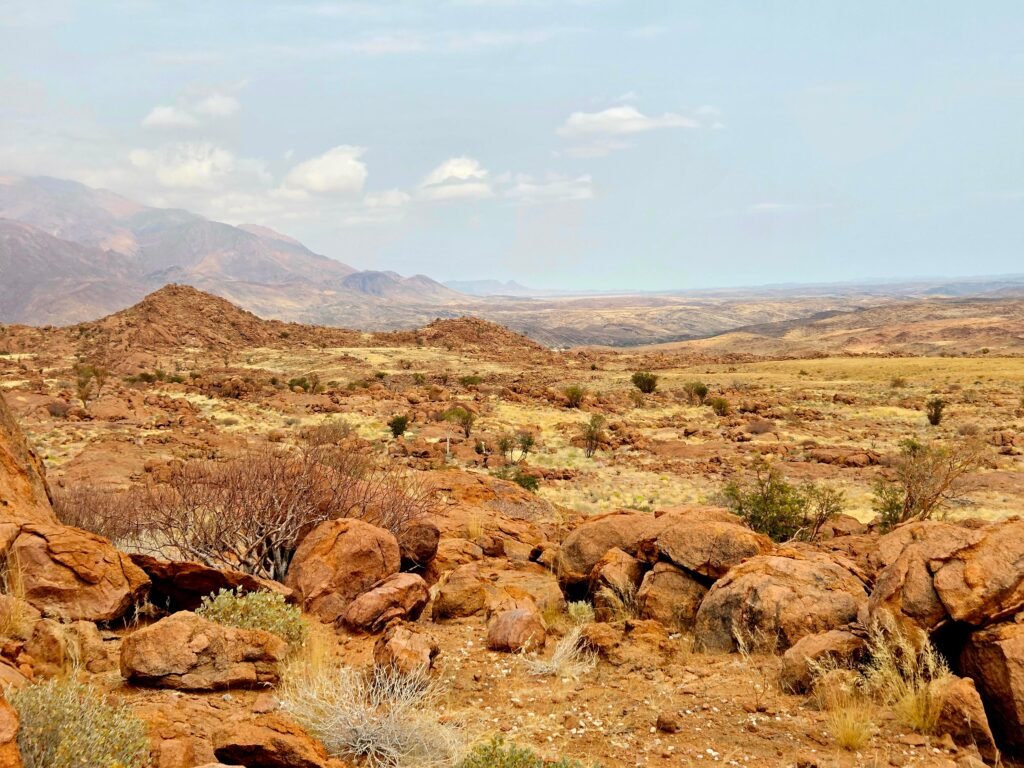
Later at Cheetah Camp, a small group of us went exploring and hiked an extra 5km through the rocky terrain.
Day 4: Cheetah Camp to White Lady Lodge
Distance: 13.83km
After leaving Cheetah Camp, we rejoined the 4×4 road. The path was very rocky and passed through some stunning gorges.
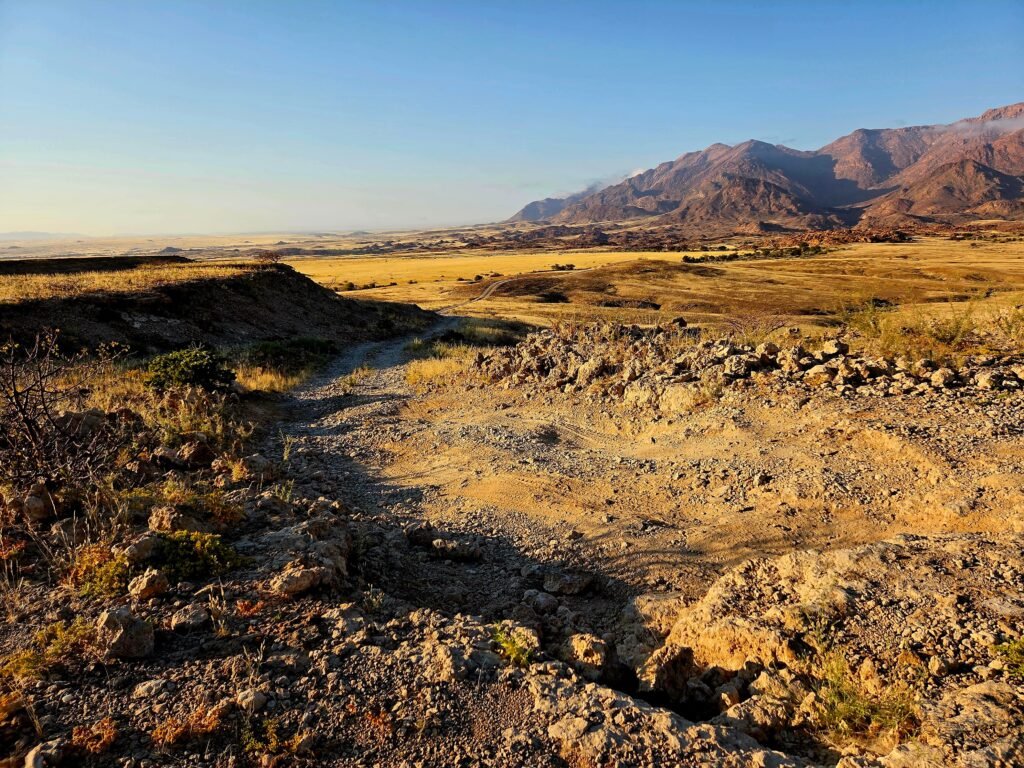
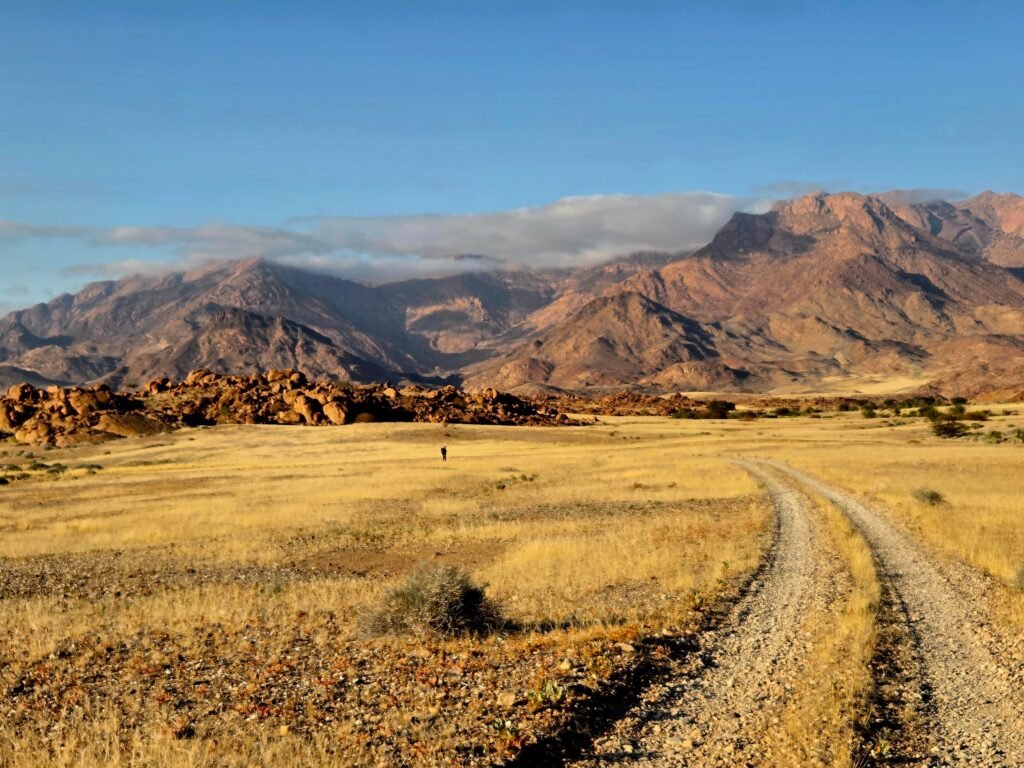
After breakfast at the “breakfast tree,” our team split into smaller groups, each heading off in different directions with the goal of reaching the White Lady Lodge.
This part was my favourite. We could choose our own path and explore freely. My group left the main trail and headed out across the open, empty land of Namibia, moving between savanna and mountains.
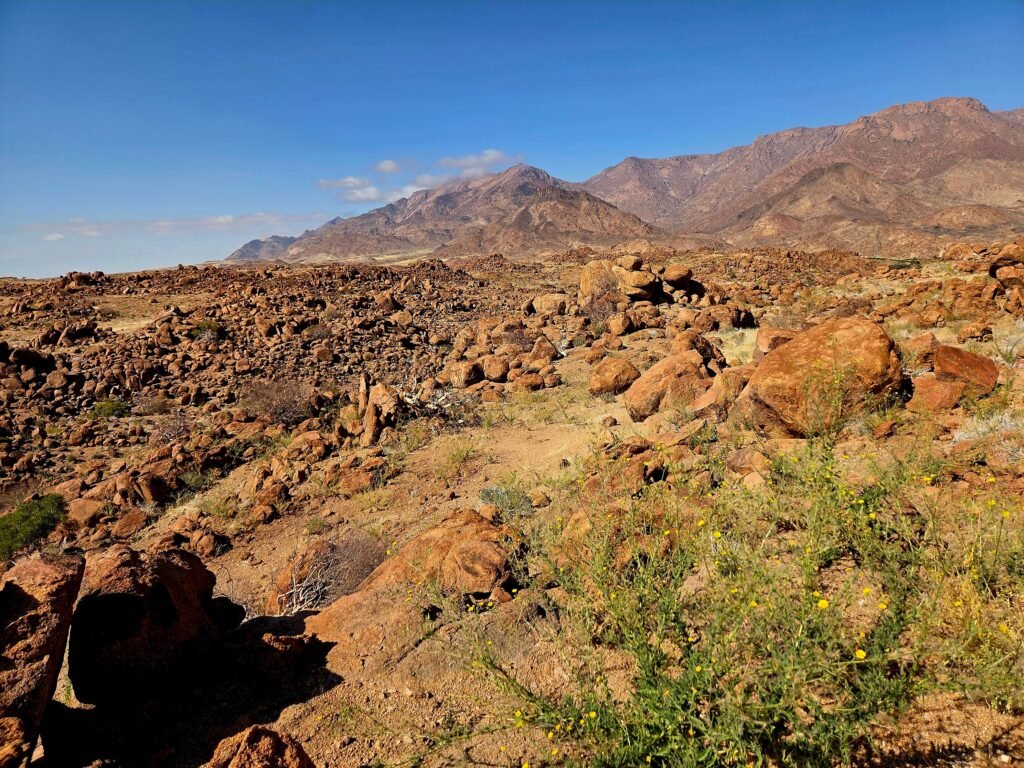
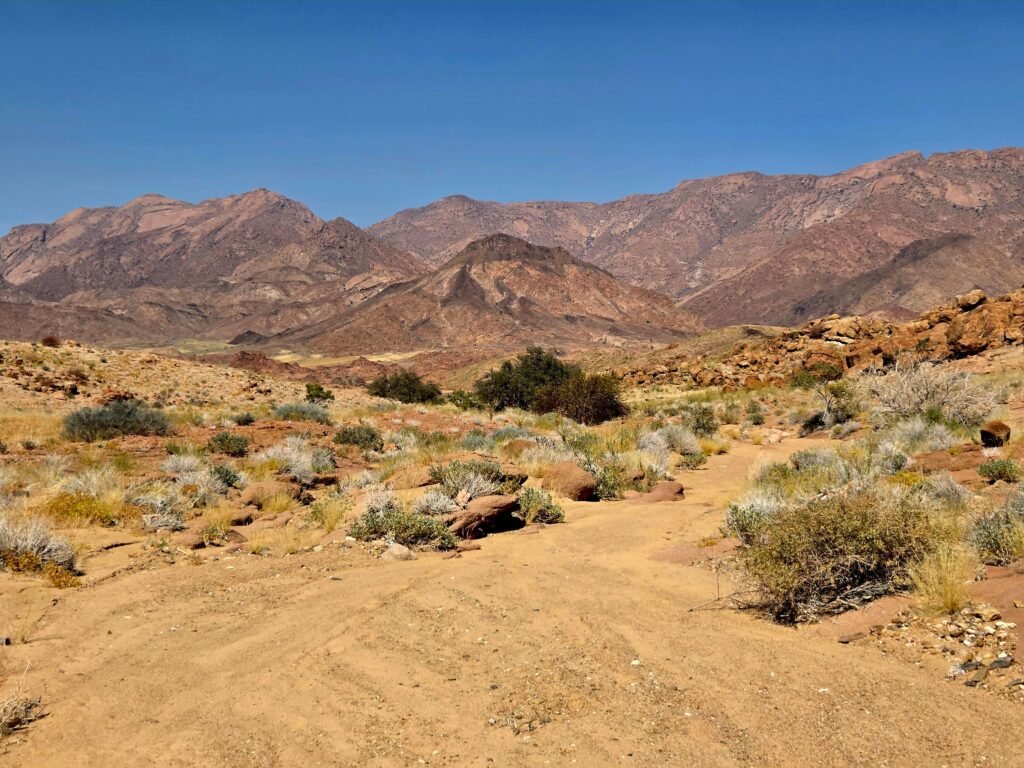
We climbed over boulders and crossed swampy areas before finally reaching the Ugab riverbed. From there, we continued to White Lady Lodge, our last campsite in Damaraland.
Essential Multiday Hiking Gear
- Hiking boots
- Daypack (20-30L)
- Gaitors
- Bug spray (black flies are bad!)
- Sunscreen and sun protection
- Water bladder or bottle (minimum 2L)
- Headlamp and spare batteries
- Personal toiletries (feminine hygiene products)
- Power banks
Best Time to Visit Damaraland
The dry winter months from May to October are the best time to hike in Damaraland. The weather is stable, with warm days and cool to cold nights, especially near the mountains.
Rain is rare, so trails stay dry and easy to walk. Wildlife like elephants, springbok, and oryx are easier to spot as they gather at water sources.
Clear skies, low humidity, and great views make this season perfect for hiking and photography.
Final Thoughts
Four days hiking the Camino in Damaraland was an incredible experience with remote landscapes, raw beauty, and a deep sense of connection to nature. I highly recommend Namibia for anyone looking for a unique and unforgettable adventure.